Contaminated soil can quickly become a major consideration on a construction or redevelopment site. Once excavated material is identified as potentially contaminated, project teams need to determine what it is, whether it can be treated or reused, and what happens if it has to leave the site.
Grounded Environmental provides contaminated soil assessment, waste characterisation, classification, treatment and disposal support across Somerset, Devon, Dorset, Cornwall and the wider South West. By combining environmental consultancy with practical remediation contracting experience, the company helps clients manage contaminated materials as part of the wider development and remediation strategy.
Why contaminated soil classification matters
Not all excavated soil should automatically be treated as waste, and not all potentially contaminated material can be managed in the same way.
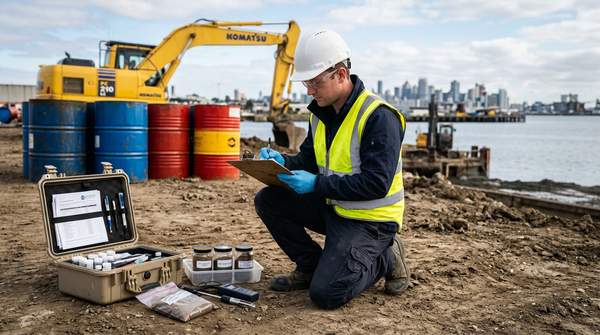
Before deciding how material should be handled, project teams need appropriate information about its characteristics. Sampling and testing can help establish the nature of the material and inform its classification, treatment or disposal route.
Grounded Environmental provides waste characterisation and classification services that cover sampling and testing of site-won materials, Waste Classification using WM3/LoW, hazardous waste assessment and treatment and disposal options.
Getting this stage right matters because classification can influence what happens next.
Incorrect or insufficiently supported classification can create compliance concerns, while an unnecessarily conservative approach may result in potentially avoidable disposal and haulage costs.
The objective should be an accurate assessment that supports the intended remediation and development strategy.
Contaminated soil is a project issue, not simply a waste issue
One common mistake is to consider contaminated soil separately from the rest of the construction programme.
Excavation, stockpiling, testing, treatment, movement and disposal can all affect site logistics. If these activities are not considered early, they may interfere with earthworks or create delays when unexpected materials are encountered.
This is why Grounded Environmental takes a delivery-focused approach to contaminated land. Its services extend from waste classification through soil treatment and disposal to remediation contracting, allowing contaminated materials to be considered alongside the practical requirements of the site.
For developers and contractors, that can provide a more joined-up way of managing ground risk.
Could contaminated soil be treated?
Where contamination is identified, disposal is not necessarily the only consideration.
The appropriate solution depends on the material, the contaminant, the intended development and applicable requirements. Treatment options may need to be assessed alongside excavation, material movement and disposal routes.
Grounded Environmental provides end-to-end contaminated soil treatment and disposal support, covering waste classification and excavation through to treatment, haulage and compliant disposal.
The advantage of assessing these routes as part of an overall remediation strategy is that the project team can consider the practical consequences before committing to a particular course of action.
A delivery-led approach can also help ensure that the selected remediation method is workable within the site's physical and programme constraints.
When soil reuse could be an option
For suitable materials, keeping soil on site can be an important consideration.
If excavated material can be appropriately reused within the development, this may reduce the quantity of material requiring export and potentially reduce associated disposal and transport requirements. However, reuse needs to be properly planned, documented and implemented.
Grounded Environmental supports developers and contractors with Materials Management Plans under the CL:AIRE Definition of Waste: Development Industry Code of Practice framework. Its MMP service is designed to maximise appropriate soil reuse while minimising unnecessary waste export.
The company's support includes stockpile surveys, MMP preparation, Qualified Person liaison, implementation support, record keeping and verification reporting. It also integrates materials management with earthworks and remediation works.
That last point is particularly relevant on active construction sites, where the success of a materials management plan depends on how well it translates into day-to-day site operations.
Why early planning can make contaminated soil easier to manage
Discovering contaminated material during excavation can put pressure on a project team.
Site operations may need to pause or change while the material is investigated. Stockpiles may need to be managed, samples arranged and disposal or treatment routes established.
Early consideration of potential contamination cannot eliminate every unexpected ground condition, but it can provide a framework for responding to it.
Grounded Environmental's brownfield remediation reviews are designed to identify remediation risks and environmental constraints before acquisition, planning or construction. Outputs can include an outline remediation strategy, budget cost ranges, programme implications and identification of information gaps.
For a developer or contractor, that early visibility can help turn an uncertain ground condition into a planned project consideration.
Connecting waste classification with remediation strategy
Waste classification should not happen in isolation.
A classification decision may affect the available treatment, reuse or disposal routes, while the chosen remediation strategy can determine what materials will need to be excavated and how they will be managed.
Grounded Environmental's remediation strategy service includes options appraisal, remediation method selection, regulatory engagement and implementation planning. The company states that its strategies are developed with practical delivery in mind, rather than being designed solely for regulatory approval.
That distinction matters when the final objective is to complete physical remediation efficiently and compliantly.
A strategy needs to account for the realities of the site: access, sequencing, earthworks, material handling, programme requirements and the practicalities of implementing the chosen solution.
What about other ground risks?
Contaminated soil is not the only environmental issue that can affect a development.
Invasive species can create additional constraints, particularly where Japanese knotweed or other invasive plants are present. Grounded Environmental provides survey, management planning and physical treatment services, including herbicide treatment programmes, excavation and removal where required, validation and reporting.
Considering these issues together can be particularly useful on brownfield, infrastructure and development sites where multiple ground-related risks may overlap.
Rather than dealing with each issue as a completely separate exercise, a coordinated approach can help project teams understand how environmental requirements interact with construction activities.
Why contractor experience matters
A remediation strategy may be technically sound, but its value ultimately depends on whether it can be implemented effectively.
Grounded Environmental was established to bridge the gap between environmental consultancy and remediation contracting. Its stated approach combines technical understanding with practical execution, with solutions considered in relation to compliance, programme, budget and buildability.
The company reports more than 40 years of combined remediation contracting and project delivery experience. Its team includes Steve Dyke, Founder/Director, and Hayden Ventham, Director, who the company states has more than 25 years of experience in environmental management and remediation contracting and a portfolio of more than 500 successfully remediated sites.
For clients dealing with contaminated materials, that practical background can be relevant because the challenge is rarely confined to producing a report. The solution has to work on the actual site.
A practical route from contaminated soil to completed remediation
Managing contaminated soil successfully involves more than finding somewhere to take excavated material.
The right process starts with understanding what the material is, how it should be classified and what options are available. From there, the project team can consider treatment, disposal or appropriate reuse in the context of the wider remediation and construction strategy.
Grounded Environmental offers this joined-up support across contaminated land assessment, waste classification, Materials Management Plans, soil treatment and disposal and remediation contracting.
For developers, contractors, landowners and other project stakeholders, bringing these considerations into the project early can provide greater clarity around ground risk, cost and programme.
If your project involves contaminated soil, brownfield land, unexpected ground conditions or planned remediation works, Grounded Environmental can discuss the site and help identify the most practical next step.
Based in Taunton, the company supports projects across Somerset, Devon, Dorset, Cornwall and the wider UK, providing end-to-end contaminated land and remediation support from assessment and strategy through to delivery.